New, Leased, or Second-Hand? Mastering Your Fleet in UK Railway Tycoon
Welcome back, railway magnates!
In the bustling world of UK Railway Tycoon, your success hinges on more than just winning routes; it’s about the engines and carriages that run on them. Your fleet, known in the industry as traction, is the heart of your company. It’s your biggest asset, your greatest expense, and the primary way your passengers experience your service.
Today, we’re doing a deep dive into the strategic choices you’ll face when acquiring and managing your trains. It’s a core feature of the game that presents you with a classic business dilemma: do you invest for the long term, find a flexible modern solution, or take a cheaper risk for rapid growth?
The Three Paths to Procurement 🚂
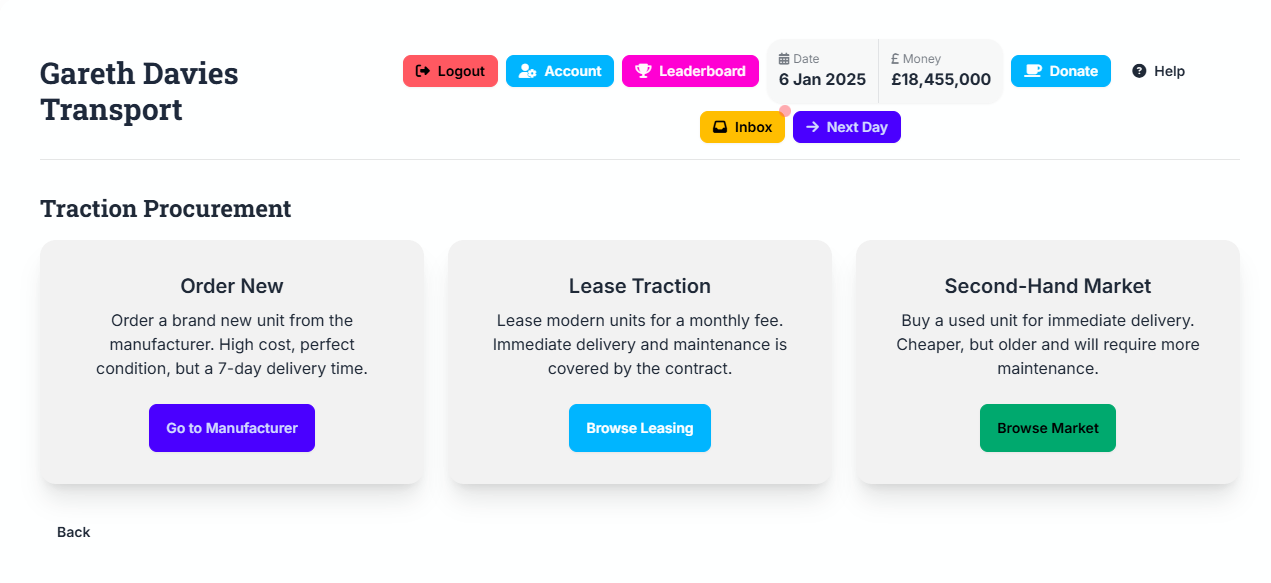
When you need to add a new train to your fleet, the “Traction Procurement” screen offers you three distinct options, each with its own strategic advantages and disadvantages.
1. Order New from the Manufacturer
This is the premium option. You get a brand-new, state-of-the-art train in perfect 100% condition. It’s reliable, passengers love it, and it won’t need immediate maintenance.
- Pros ✅: Perfect condition, maximum reliability, boosts passenger satisfaction.
- Cons ❌: Highest cost, and there’s a 7-day delivery time from the factory. You need to plan your expansion in advance!
2. Lease Modern Traction
Don’t have the capital for a brand-new train? Leasing is a fantastic, flexible alternative. You can acquire a modern unit for a monthly fee, and it’s delivered to your depot instantly.
- Pros ✅: Instant delivery, lower upfront cost, and best of all, maintenance is covered by the leasing company! This saves you money and the headache of repairs.
- Cons ❌: You’re paying a recurring monthly fee, and you don’t own the asset. When the lease expires, the train is returned, which could leave a sudden gap in your services if you’re not prepared.
3. Browse the Second-Hand Market
For the tycoon who needs a train right now and on a budget. The second-hand market is a gamble that can pay off handsomely. You can find some real bargains on older units.
- Pros ✅: The cheapest option by far, with instant delivery. Perfect for quickly assigning a train to a newly won route to get the cash flowing.
- Cons ❌: These trains are older and arrive in poorer condition. They will require more frequent and costly maintenance and will have a bigger negative impact on passenger satisfaction if neglected. The stock is also limited and only refreshes once a week.
It’s More Than Just a Machine: Maintenance & Staffing 🔧
Acquiring a train is just the first step. To get it earning you money, you need to manage it effectively.
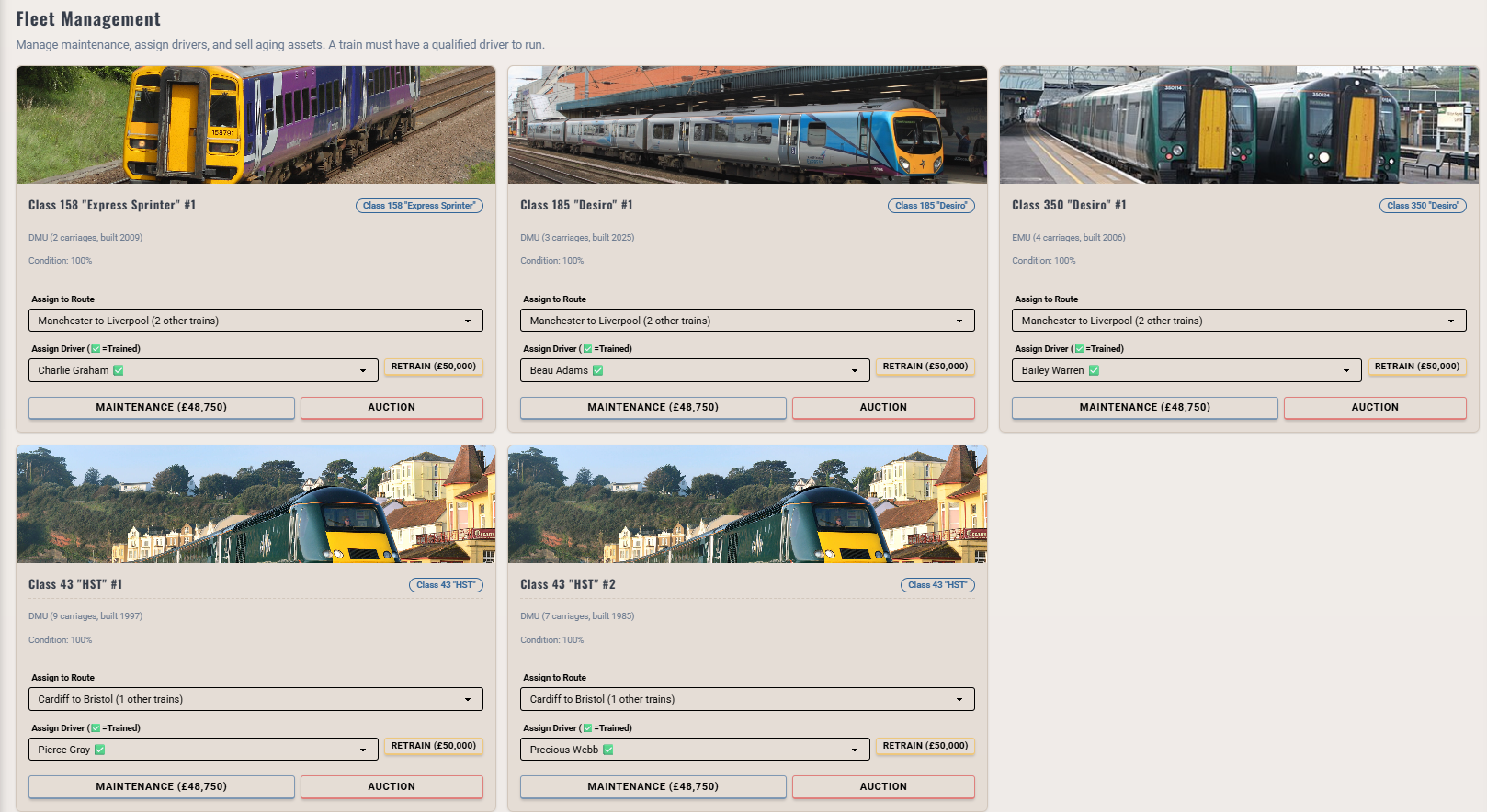
A train’s Condition degrades with every journey. The older it is and the less capable its driver, the faster it wears down. Running a poorly maintained fleet is a surefire way to anger passengers and watch your satisfaction rating plummet. To fix your fleet, you’ll need to hire skilled Engineers, who can perform maintenance for a fee. The better your engineers, the bigger the discount on repairs!
Most importantly, a train can’t move without a Driver. But here’s the catch: a driver must be specifically trained on that class of train. Assigning a train to a route with an unqualified driver results in a “ghost train” service, which severely damages your company’s reputation. You’ll need to manage your driver roster carefully, paying a one-off fee of £50,000 to retrain them on new traction types as you acquire them.
Your fleet strategy will define your company. Will you be a premium operator with a flawless, modern fleet? Or a budget opportunist, squeezing every last drop of value from the second-hand market? The choice is yours!
Happy building!